GSNE Services Delivers Geotechnical Site Investigation and Slope Stability Assessment for Sutherland Shire Council
GSNE Services is pleased to support Sutherland Shire Council with a geotechnical site investigation and slope stability assessment for the proposed pedestrian access upgrade at 70 Glaisher Parade, Cronulla NSW.
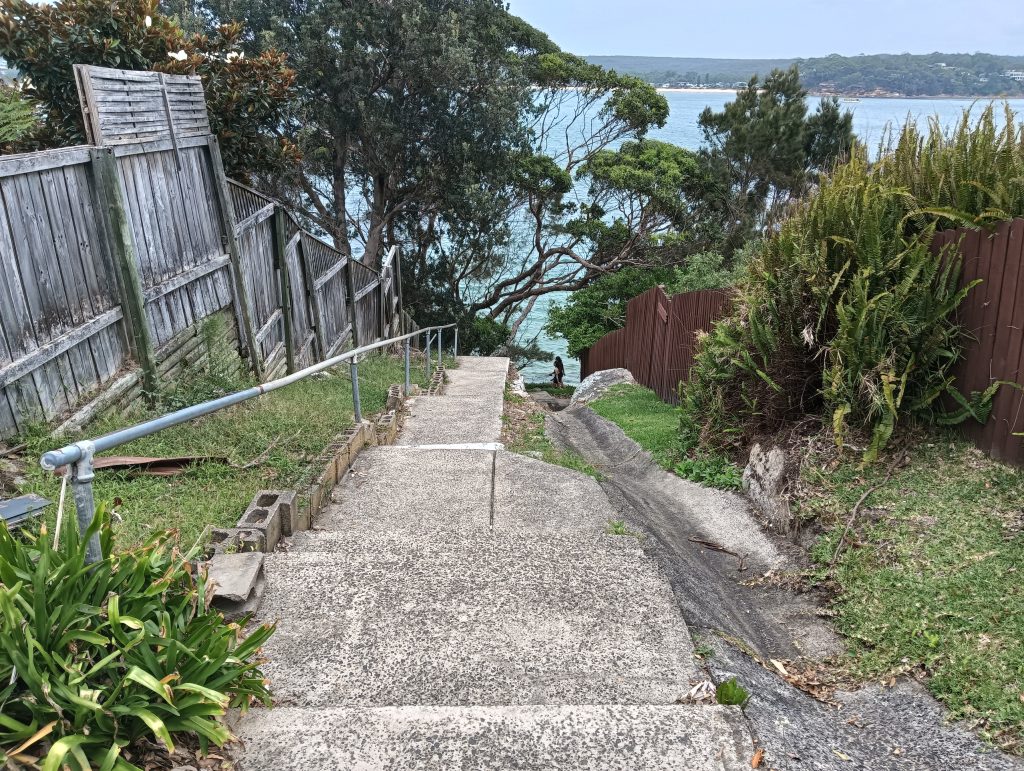
The investigated area comprises an existing pedestrian access pathway, stairway and associated paved sections extending from Glaisher Parade down toward the public foreshore walking path adjacent to the ocean. The site forms an important public access link between the elevated residential street frontage and the lower coastal reserve walkway network.
Project & Site Context
The proposed works involve construction of new steel/FRP stair framing with associated concrete and/or stone foundations. The site is located on steeply sloping coastal terrain, with level changes accommodated by stairs, landings and pedestrian path segments.
GSNE Services’ scope included a site walkover inspection, service locating, drilling of three boreholes with adjacent DCP testing, laboratory testing, geotechnical interpretation, foundation recommendations and slope stability assessment. The investigation was undertaken generally in accordance with AS 1726–2017 Geotechnical Site Investigation.
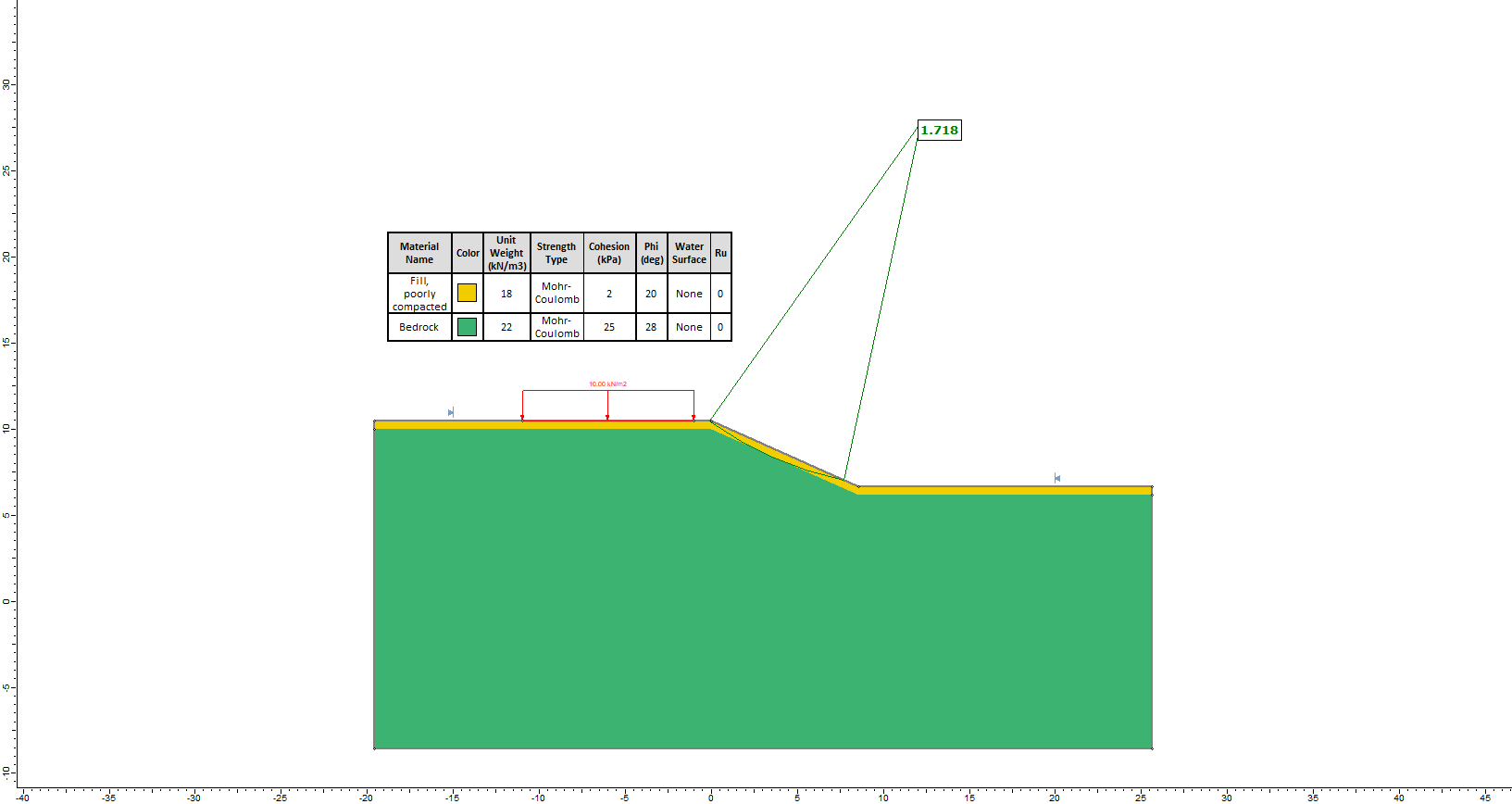
The ground profile encountered at the site generally comprised approximately 0.3 m to 0.5 m of poorly compacted fill/topsoil overlying sandstone bedrock. No groundwater was observed during drilling, although minor seepage through joints and defects, or perched water within fill following rainfall, may occur.
Our geotechnical assessment identified key constraints including excavation conditions, foundation founding requirements, drainage control and slope instability risk. Foundations were recommended to extend through the existing fill and be founded on competent underlying sandstone, subject to geotechnical inspection during construction.

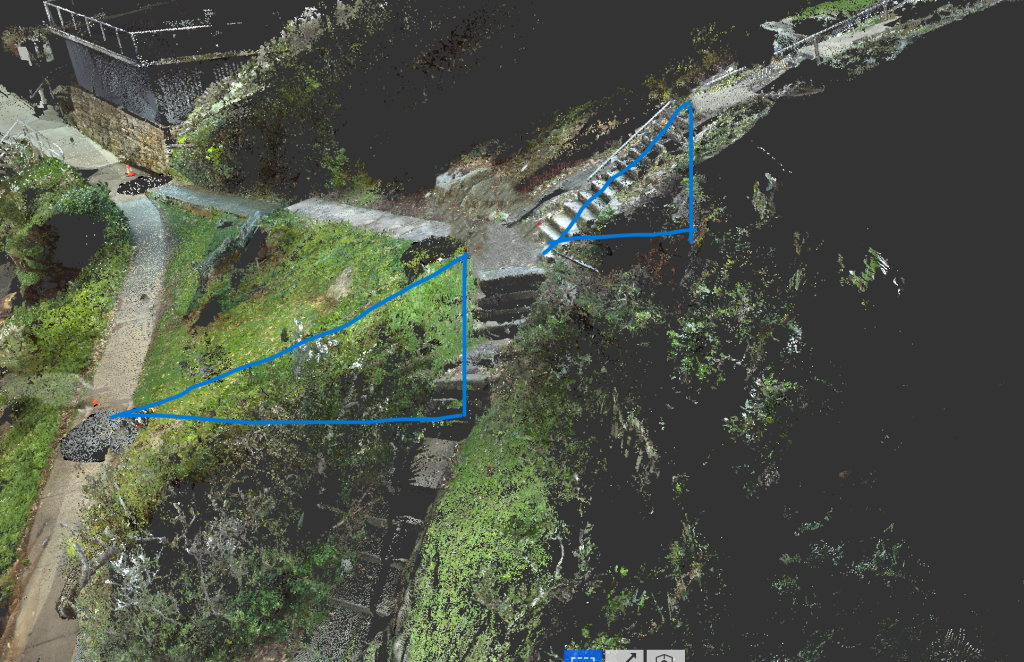
A slope stability assessment was carried out for two critical slope sections using Bishop, Janbu and GLE/Morgenstern-Price limit equilibrium methods. The upper slope was identified as the critical slope section. Under the existing condition with poorly compacted fill, the calculated factor of safety for the upper slope ranged from 1.18 to 1.21, which was below the adopted minimum criterion of 1.5 for permanent conditions.
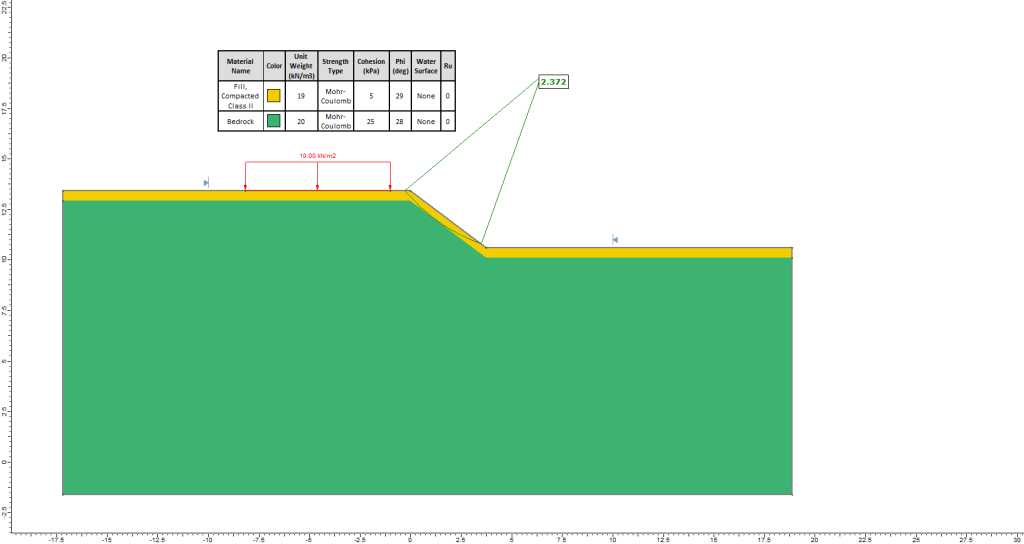
The assessment showed that removal of uncontrolled near-surface fill and replacement with controlled engineered fill would significantly improve slope stability. Replacement with Class II controlled fill increased the calculated factor of safety for the upper slope to approximately 2.37 to 2.41, while Class I controlled fill provided a further increase to approximately 3.20 to 3.54.
This project demonstrates GSNE Services’ capability in supporting local government infrastructure projects through practical geotechnical investigation, foundation advice, earthworks recommendations and slope stability assessment for public access assets in challenging coastal environments.
Boutique expertise, big-firm experience. If your project sits near sensitive rail, road or utility infrastructure, GSNE can support it from DA stage through to construction.